Source Battery Spot Welding Nickel Strip for Electronics, Medical, Aviation
Compare 27 listings of battery spot welding nickel strip from verified Chinese manufacturers. Options include copper nickel sheets and offset strips with customizable thickness and width for industrial applications.
Key considerations
Products List








Comprehensive Sourcing Guide
Strategic Sourcing Guide for Battery Spot Welding Nickel Strip
Procuring high-performance nickel strips for battery spot welding requires a nuanced understanding of material science, precise dimensional tolerances, and rigorous supplier verification. The market for battery spot welding nickel strip is defined by the critical need for low electrical resistance and high mechanical strength to ensure safe, efficient energy transfer in lithium-ion battery packs. Buyers must navigate a complex landscape where product attributes vary significantly based on the specific cell chemistry and pack architecture. This guide synthesizes observed market data and technical requirements to provide a disciplined framework for sourcing these essential components.
Technical Specifications and Material Composition
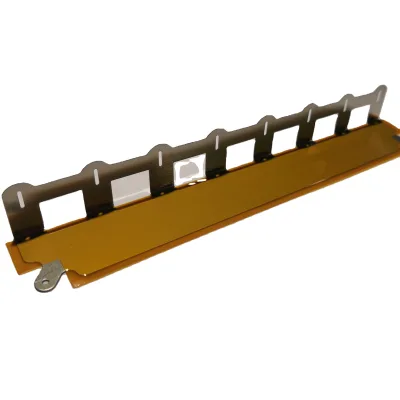
The foundation of a successful procurement strategy lies in defining precise technical specifications. The core material for these strips is often a composite of copper and nickel, or pure nickel plated onto steel, depending on the application's conductivity and cost requirements. Observed product data indicates that specific configurations include a 0.3mm copper base with a 0.15mm nickel plating, as well as a 1.0mm copper base with a 0.2mm pure nickel layer. These dimensional variations are not arbitrary; they directly influence the current-carrying capacity and the thermal profile during the spot welding process.
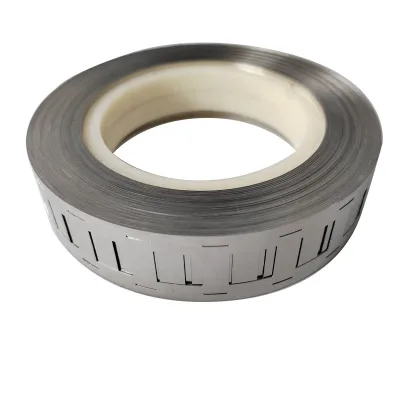
Thickness is a primary variable, with observed ranges spanning from 0.1mm to 0.25mm for pure nickel strips, and specific composite options like 0.1mm, 0.127mm, 0.15mm, and 0.2mm. The width is equally critical, often available in standard 10mm increments or fully customizable to fit specific cell spacing. For instance, cell space requirements may be standardized at 19mm or 19.5mm, or tailored to custom dimensions. The shape of the strip also varies, with "Offset Shape Nickel Strip" being a distinct category designed for specific welding geometries, alongside standard flat strips.
Material purity is another non-negotiable specification. High-quality sourcing demands verification of purity levels, with observed benchmarks indicating a purity greater than 99.5%. The type of steel used in plated variants is often specified as SPCC Steel Strip or DC01, which must be confirmed against the buyer's conductivity and corrosion resistance needs. The production mode for these strips is frequently precision stamping, ensuring that the final product maintains tight tolerances essential for consistent welding results.
Compliance, Certification, and Standards Verification
In the battery manufacturing sector, compliance is not merely a formality but a prerequisite for market access and safety assurance. Buyers must rigorously verify that suppliers adhere to recognized international and national standards. Observed data highlights compliance with GB/T standards, as well as ASTM and GB standards, which govern the material properties and testing methodologies. It is essential to confirm that the specific batch of nickel strips meets the relevant GB standard for the intended application, whether for consumer electronics or industrial battery packs.
Certification checks should extend beyond material standards to include quality management and environmental compliance. High-confidence facts indicate that reputable suppliers often hold ISO9001:2015 certification, ensuring a robust quality management system. Additionally, environmental safety is paramount, with RoHS compliance being a standard requirement to restrict hazardous substances. Third-party verification from agencies like SGS further validates the product's adherence to safety and quality benchmarks.
When evaluating a supplier, buyers should request current certificates and verify their validity. The absence of these certifications should be treated as a red flag, particularly for applications in the medical, aviation, or electronics sectors where regulatory scrutiny is intense. The standard "prod_standard" may also be listed as "custom," which requires the buyer to explicitly define the technical standard in the purchase order to avoid ambiguity.
Cost Drivers and Pricing Dynamics
Understanding the cost structure of battery spot welding nickel strips is vital for budgeting and negotiation. The price range observed in the market is broad, spanning from $0.01 to $1,500 per unit, reflecting the diversity of product types, from small sample packs to bulk industrial rolls. This variance is driven by several factors, including material composition, thickness, width, and the complexity of the customization.
The Minimum Order Quantity (MOQ) is a significant cost driver. Observed MOQs range from 1 piece to 5,000 pieces, with specific product lines requiring 100 pieces or 3 kilograms. For buyers with lower volume needs, the unit cost may be higher due to setup charges, whereas high-volume orders benefit from economies of scale. The weight per roll, observed at 5 kilograms, also influences shipping costs and inventory management.
Customization is a major factor in pricing. While standard products like the 18650 or 21700 copper nickel sheets may have fixed pricing, custom dimensions, offset shapes, or specific plating thicknesses will incur additional costs. Buyers should anticipate that OEM (Original Equipment Manufacturer) services, which are widely accepted and welcomed by suppliers, will add a premium to the base price. The lead time, typically 3-5 work days for standard items, can also impact the total cost if expedited shipping is required to meet production schedules.
Typical Applications and Product Selection
The application of battery spot welding nickel strips is diverse, ranging from consumer electronics to heavy industrial machinery. The product name often indicates the specific battery cell type it is designed for, such as 18650, 21700, or 26650 battery packs. For example, a "21700 Copper Nickel Sheet" is tailored for the larger 21700 cells, while "18650 Copper Nickel Sheet" serves the ubiquitous 18650 format. The dimensionality of the strip, such as "18650-10p," suggests a specific configuration for a 10-cell parallel pack.
Usage scenarios dictate the choice of material and shape. The "Spot Welding Nickel Strip" is primarily used for connecting cells in series or parallel configurations. The "26650 Offset Nickel Strip" is specifically engineered for 26650 battery pack welding, offering an offset shape that facilitates easier access and better alignment during the welding process. The available space, observed at 26.3mm for certain models, must be matched to the physical constraints of the battery pack design.
Beyond battery packs, these strips find applications in chemical, medical, industrial, and aviation sectors. The high temperature resistance and good weldability of the strips make them suitable for environments where thermal stability is crucial. The "Pure Strip" material is often preferred for applications requiring maximum conductivity, while nickel-plated steel sheets offer a cost-effective alternative for less demanding applications.
Supplier Evaluation and Sourcing Strategy
Evaluating suppliers requires a holistic approach that goes beyond price comparison. Buyers should prioritize suppliers who demonstrate a clear understanding of the technical specifications and offer robust customization capabilities. The acceptance of OEM orders is a positive indicator of a supplier's flexibility and commitment to meeting specific client needs. The origin of the product, often listed as China or specifically Guangdong, China, provides insight into the manufacturing ecosystem and potential logistics advantages.
When assessing a supplier, verify their production capabilities. The use of precision stamping as a production mode suggests a high level of manufacturing control. Buyers should also inquire about the supplier's inventory management and their ability to handle the observed lead times of 3-5 work days. A supplier's willingness to provide samples and detailed technical data sheets is a strong signal of transparency and reliability.
The packaging of the product, typically in cartons, should be evaluated for its ability to protect the strips during transit. Damage to the nickel plating or the physical shape of the strip can compromise its performance, so secure packaging is essential. Additionally, the supplier's responsiveness to inquiries and their ability to provide clear documentation regarding standards and certifications are critical factors in the selection process.
Quality Control and Long-Term Procurement Considerations
Quality control is the final gatekeeper in the procurement process. Buyers must implement rigorous inspection protocols to ensure that the delivered nickel strips meet all specified criteria. Key quality attributes include high temperature resistance, corrosion resistance, and excellent weldability. These characteristics are not merely marketing claims but functional requirements that must be verified through testing.
For long-term procurement, establishing a consistent supply chain is paramount. Buyers should consider the supplier's capacity to scale production as their own demand grows. The availability of custom dimensions and the ability to maintain consistent quality over time are essential for maintaining product reliability. The observed characteristic of "High Temperature Resistant" and "Good Weldability" should be validated through periodic testing of incoming materials.
Furthermore, buyers should monitor the market for changes in standards and certifications. As regulations evolve, suppliers must adapt to maintain compliance. A proactive approach to supplier relationships, including regular audits and performance reviews, can help mitigate risks and ensure a steady supply of high-quality nickel strips. By focusing on these long-term considerations, buyers can build a resilient supply chain that supports the continuous production of safe and efficient battery packs.
FAQs
What are the standard thickness options for copper nickel sheets?
Standard thickness options include 0.3mm copper with 0.15mm nickel plating or 1.0mm copper with 0.2mm pure nickel. Other available thicknesses range from 0.1mm to 0.25mm depending on the specific product configuration and customization requirements.
Which certifications do these nickel strips typically hold?
These products typically hold ISO9001:2015, RoHS, and SGS certifications. These credentials verify compliance with quality management systems and environmental safety standards required for industrial and electronics applications.
How long is the lead time for standard orders?
The standard lead time is 3 to 5 work days for most items. This duration applies to typical orders, though custom specifications or large volume requests may require adjusted scheduling.
Can suppliers accept OEM customization requests?
Yes, suppliers explicitly accept and welcome OEM customization requests. Buyers can specify custom widths, cell spaces, or dimensions to fit specific battery pack architectures like 18650 or 21700 formats.
What is the minimum order quantity for these strips?
Minimum order quantities vary by product, ranging from 1 piece to 5000 pieces. Specific items may require 100 pieces or 3 kilograms, depending on the type of strip and material composition.
Where are these nickel strips manufactured?
These strips are manufactured in China, with specific origins noted in Guangdong. This location indicates the primary manufacturing hub for the observed product lines and associated supply chain logistics.
What materials are used for the nickel strips?
Materials include pure nickel strips, copper nickel composites, and nickel-plated steel sheets. Steel variants often use SPCC or DC01 types, while pure strips offer high conductivity for demanding applications.